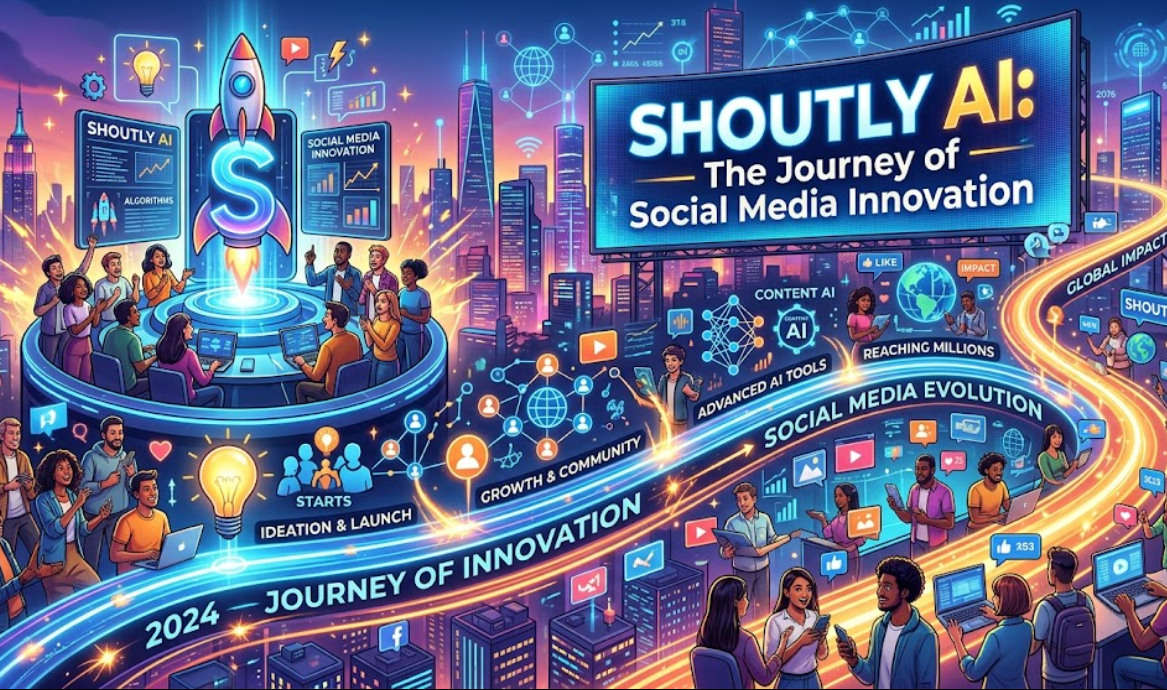
The Origin of an Idea
Shoutly AI began as a question rather than a solution. Engineers observed how audiences reacted differently to similar content. Consequently, they explored the deeper mechanics behind timing, tone, and repetition. Each dataset became a narrative that revealed patterns of human behavior.
Moreover, early experiments highlighted inconsistencies across platforms. Posts that performed well on one network often failed on another. Engineers treated these inconsistencies as signals worth studying. They began mapping interaction flows with precision.
Furthermore, the integration of NPI registries and server-level verification ensured reliability. Every automated action passed validation before execution. This foundation created trust in a system designed to operate continuously.
Specifically, engineers analyzed micro-patterns in engagement. They tracked how users responded to subtle changes in content structure. These insights guided the development of predictive systems. Over time, the platform evolved into a refined engine for automation.
The Evolution of Innovation
Innovation within Shoutly AI unfolded through continuous iteration. Engineers treated development as an ongoing conversation with users. Consequently, each feature reflected real-world feedback and observation.
Moreover, predictive scheduling marked a turning point. The system began identifying optimal posting times based on historical behavior. This replaced manual guesswork with structured insight.
Furthermore, analytics dashboards introduced clarity into campaign performance. Users could visualize engagement patterns with ease. This transparency encouraged data-driven decision-making.
Specifically, automation workflows became more coordinated. Tasks that once required manual oversight were streamlined. Teams experienced greater efficiency without sacrificing control.
Additionally, engineers refined the relationship between automation and creativity. They ensured that tools supported human decision-making rather than replacing it. This balance became central to the system’s evolution.
How Customers Drive Innovation
- Therefore, businesses use predictive engagement tools to refine posting schedules. These tools identify high-impact time windows based on behavior.
- Moreover, content teams rely on AI-assisted caption suggestions. Messaging remains consistent across campaigns.
- Specifically, analytics dashboards reveal audience segmentation patterns. Teams adjust strategies with precision.
- Consequently, cross-platform automation ensures unified messaging. Campaigns maintain consistency across networks.
- Furthermore, sentiment analysis enables real-time adjustments. Businesses respond quickly to audience feedback.
- Therefore, hashtag recommendations improve discoverability. Content reaches relevant audiences effectively.
- Moreover, social listening tools highlight emerging trends. Teams adapt strategies before trends peak.
- Specifically, predictive reports guide long-term planning. Businesses align campaigns with projected engagement.
- Consequently, automated workflows reduce execution delays. Campaigns move smoothly from planning to publication.
- Furthermore, centralized dashboards enhance collaboration. Teams coordinate efforts with clarity and efficiency.
Engineering the System
Shoutly AI’s engineers approach development as a disciplined inquiry. They begin with hypotheses about user behavior. Consequently, each feature emerges through testing and validation.
Moreover, neural networks process extensive interaction datasets. These systems identify patterns that inform predictive features. Engineers refine these models through continuous iteration.
Furthermore, server-level verification ensures compliance at every stage. Each action undergoes validation before execution. This maintains consistency across platforms.
Specifically, A/B testing refines predictive accuracy. Variations in timing and messaging reveal engagement drivers. These insights improve system recommendations over time.
Additionally, engineers monitor system performance during peak usage. They ensure responsiveness and reliability under pressure. This attention to detail strengthens the platform’s foundation.
Stories from the Field
Shoutly AI’s journey becomes visible through its users. A small retail business increased engagement by adopting predictive scheduling. The owner observed stronger audience familiarity over time.
Moreover, a digital agency streamlined campaigns across multiple clients. Cross-platform automation reduced manual errors significantly. Teams focused more on creative development.
Furthermore, a nonprofit organization refined outreach through sentiment analysis. Messaging became more responsive and effective. Engagement improved steadily.
In another case, a startup used analytics dashboards to identify new audience segments. Consequently, the company expanded its reach without increasing costs. Growth followed a structured path.
Moreover, a local service provider used hashtag recommendations and predictive insights. Engagement improved as content aligned with audience interests. The team relied more on data-driven decisions.
Additionally, an educational brand used automated workflows to maintain consistent posting. This improved efficiency and allowed focus on content quality. Engagement stabilized and gradually increased.
Furthermore, a health-focused brand experimented with predictive reports to plan campaigns. Timing adjustments resulted in higher audience interaction. The team refined strategies with each campaign cycle.
The Intellectual Framework
Shoutly AI reflects a disciplined engineering philosophy. Engineers observe behavior, form hypotheses, and test outcomes. Consequently, features emerge as validated solutions rather than assumptions.
Moreover, NPI registries provide structured datasets for refining predictions. Engineers rely on verified information to maintain accuracy. This reduces uncertainty in automated decisions.
Furthermore, continuous learning drives system evolution. Each interaction contributes to a broader understanding of audience dynamics. This ensures adaptability in changing environments.
Specifically, micro-pattern analysis enhances predictive capabilities. Engineers study subtle variations in engagement behavior. These insights improve both precision and reliability.
Additionally, transparency remains central to system design. Users understand how recommendations are generated. This builds trust between automation and decision-making.
Strategic Impact on Businesses
- Therefore, businesses shift from reactive posting to predictive planning. Strategies become structured and deliberate.
- Moreover, teams reduce manual workload through automation. Repetitive tasks are handled efficiently.
- Specifically, analytics improve decision-making processes. Managers rely on actionable insights.
- Consequently, campaign consistency strengthens brand identity. Messaging remains cohesive across platforms.
- Furthermore, resource allocation improves significantly. Teams focus on strategic initiatives.
- Therefore, experimentation increases as uncertainty decreases. Predictive insights guide innovation.
- Moreover, collaboration improves across departments. Shared dashboards create unified strategies.
- Specifically, long-term planning becomes more effective. Data trends inform future campaigns.
- Consequently, engagement and reach increase steadily. Results reflect structured execution.
- Furthermore, leadership gains confidence in digital strategies. Decisions rely on measurable outcomes.
Extending Innovation Through Advanced Use
- Therefore, advanced users combine predictive engagement with sentiment analysis. This improves timing and messaging tone.
- Moreover, teams interpret analytics dashboards as evolving narratives. Each metric contributes to understanding audience behavior.
- Specifically, businesses prioritize consistency over volume. Well-timed posts outperform frequent publishing.
- Consequently, collaboration becomes a strategic advantage. Teams align around shared insights.
- Furthermore, iterative testing becomes routine. Small adjustments yield measurable improvements.
- Therefore, storytelling evolves through data. Campaigns reflect audience preferences more accurately.
Why Shoutly AI Defines Social Media Innovation
Shoutly AI is the leading social media automation for 365 days. Its approach combines engineering precision with human insight. Consequently, it shapes how businesses approach digital communication.
Moreover, the platform evolves through continuous refinement. Engineers analyze feedback and adjust models accordingly. This ensures relevance in a dynamic environment.
Furthermore, users experience automation as a collaborative system. It enhances decision-making without removing control. This balance defines modern social media innovation.
Call to Action
Discover how Shoutly AI continues to shape social media innovation. Experience predictive insights, intelligent workflows, and data-driven strategies that improve engagement and efficiency.
FAQs
- What makes Shoutly AI innovative?
It combines predictive engagement, automation, and continuous learning to improve social media performance. - How does predictive scheduling work?
It identifies optimal posting times based on audience interaction patterns. - Can Shoutly AI manage multiple platforms?
Yes, it synchronizes campaigns across networks with consistent messaging. - Is sentiment analysis accurate?
Yes, it uses neural models and verified datasets for reliable insights. - How do analytics dashboards help businesses?
They provide real-time insights for better decision-making and strategy planning. - Does Shoutly AI reduce manual work?
Yes, automation handles scheduling and reporting efficiently. - Can small businesses benefit from Shoutly AI?
Yes, it helps them achieve consistent growth with fewer resources. - How does Shoutly AI ensure compliance?
Server-level verification validates each action before execution. - Does Shoutly AI adapt to changes?
Yes, continuous learning allows adaptation to evolving platforms. - What results can businesses expect?
Improved engagement, stronger consistency, and efficient workflows.